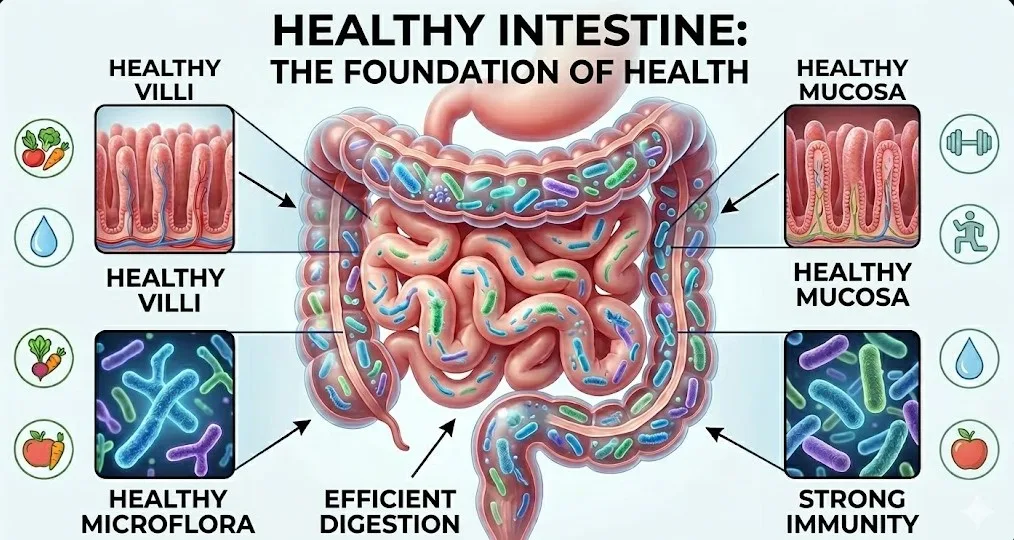
Your gut is not just a digestive organ. It is an immune command centre, a neurotransmitter factory, and an ecosystem of trillions of bacteria that shape how you feel every single day.
What it is and why it matters
In February 2026, the University of Cambridge published a landmark study: scientists analysed microbiome samples from over 11,000 people across 39 countries. They discovered a group of bacteria — CAG-170 — consistently present in healthy individuals and depleted in people with obesity, inflammatory bowel disease, and chronic fatigue syndrome.
This is not an isolated finding. By 2026, the weight of evidence points in one direction: the gut microbiome is not a wellness trend — it is a foundation of health. Roughly 70% of the body's immune cells reside in the gut. Serotonin and GABA — neurotransmitters that directly influence mood, sleep, and stress response — are produced here.
In Traditional Chinese Medicine (TCM), digestive health has always been central. The Spleen-Stomach system (脾胃) is considered the root of postnatal energy — the body's ability to extract Qi from food. Modern microbiome science is, in many ways, confirming what TCM practitioners have observed for centuries: without healthy digestion, there is no health at all.
The microbiome contains between 1,000 and 7,000 bacterial species, encoding over 100 times more genes than the human genome itself. This ecosystem responds to everything — from diet to sleep quality. And it responds fast: research shows that switching to a fibre-rich diet alters gut bacteria composition within 24 hours.
How it works
The intestinal lining is a selective barrier: nutrients pass through, harmful substances stay out. When that barrier weakens — a condition known as increased intestinal permeability — bacterial toxins enter the bloodstream and trigger chronic low-grade inflammation. Studies link this state to metabolic syndrome, cardiovascular disease, and cognitive decline.
The key protective mechanism is the production of short-chain fatty acids (SCFAs), primarily butyrate. Butyrate nourishes the cells of the gut lining, strengthens the barrier, and reduces inflammation. It is produced by beneficial bacteria — but only when they receive the right fuel: fibre and prebiotics.
A Western diet — high in processed foods, saturated fats, and refined sugar — reduces butyrate production by 40–60% compared to fibre-rich diets. It simultaneously depletes beneficial species such as Faecalibacterium prausnitzii and expands inflammatory ones.
Fructooligosaccharides (FOS) are a specific class of prebiotics. They are not digested by the human body, but they selectively nourish Bifidobacteria and Lactobacilli, strengthening the gut ecosystem. FOS is not a nutrient for you. It is food for the bacteria that keep you healthy.
The gut-brain axis is another mechanism confirmed by science. Gut bacteria produce neurotransmitters, modulate the nervous system, and influence pain perception. At NeuroGASTRO 2025, researchers confirmed the role of prebiotics and postbiotics in regulating this axis.
Benefits of regular microbiome support
- Strengthened immune response through a healthy microflora
- Support for intestinal barrier integrity and reduced inflammatory processes
- Improved nutrient absorption from food
- More stable mood and better sleep quality via the gut-brain axis
- Reduced digestive discomfort: bloating, heaviness, irregular bowel function
- Support for healthy weight through microbial ecosystem balance
Who it's for
- Anyone noticing bloating, heaviness, or irregular digestion
- People on a Western diet — high in processed foods
- Anyone recovering after a course of antibiotics — to restore microflora
- Those under chronic stress — it directly affects the microbiome
- People over 40 — microbial diversity naturally declines with age
How to apply this
Supporting your gut is not a one-off intervention. It is a system of daily habits. Four evidence-backed directions:
- Feed your microbiome. Increase fibre from vegetables, legumes, and whole grains. Add prebiotic-rich foods: garlic, onions, bananas, asparagus. Or use supplements with fructooligosaccharides — FOS is included in WHIEDA's coffee with Cordyceps and collagen, turning a morning habit into an act of microbiome care.
- Remove inflammatory triggers. Processed foods, excess sugar, and alcohol disrupt microbial balance measurably — sometimes within days. The shift does not have to be radical: even a gradual reduction in refined sugar produces noticeable results.
- Add adaptogens and gut-supportive nutrients. Spirulina — a source of chlorophyll and protein — supports the gut ecosystem without taxing digestion. Low-molecular soy peptides absorb more easily than whole proteins, reducing digestive burden. Foherb Oral Liquid based on Cordyceps and Lingzhi supports immune function — and immunity, as established, begins in the gut.
- Protect your sleep and move your body. Disrupted circadian rhythms alter gut bacteria composition. Physical activity independently increases microbial diversity — even without dietary changes. For those looking to maximise sleep quality, WHIEDA offers a 4-in-1 healthy sleep system — graphene and terahertz waves working passively throughout the night.
Conclusion
Gut health is not a niche topic for gastroenterologists. It is the foundation on which immunity, mood, energy, and even appearance rest. The science of 2026 confirms this with data: from 11,000 microbiome samples in the Cambridge study to clinical evidence on how prebiotics modulate the gut-brain axis.
You can start small — with more fibre, less refined sugar, a morning cup of coffee with fructooligosaccharides. Explore the full WHIEDA digestive health lineup in the catalogue →.